There is nothing wrong with Tex-Mex. It is its own cuisine, born from a specific place and history. The confusion comes when every Tex-Mex dish is labeled simply as Mexican food, because the terms are not interchangeable. The typical ingredients and techniques differ, though the cuisines also overlap. Here is how to tell them apart — at a glance, then in detail.
The Side-by-Side Table
| Tex-Mex | Authentic Mexican | |
|---|---|---|
| Cheese | Cheddar, Monterey Jack — often melted generously | Queso fresco, cotija, Oaxaca — often used as accents |
| Tortillas | Flour by default; preformed hard shells | Corn by default; flour common in northern dishes |
| Dairy | Thick sour cream, dolloped | Thin crema, drizzled |
| Meat | Ground beef is common | Slow-cooked pork, chicken, beef; seafood by region |
| Beans | Black or refried, standard side | Dozens of regional varieties |
| Seasoning | Cumin-heavy chili powder blends are common | Individual spices, layered; rehydrated whole chiles |
| Cheese role | Often a sauce or melted topping | Often a filling or garnish |
| Signature dishes | Nachos, fajitas, hard tacos, chili con carne | Mole, pozole, cochinita pibil, tlayudas |
Which Dish Belongs to Which Cuisine?
| Dish | Origin |
|---|---|
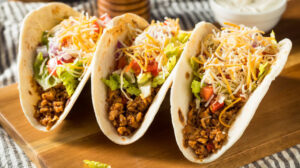
| Hard-shell tacos | Tex-Mex when made with preformed U-shaped shells |
| Nachos | Border cuisine / Tex-Mex (created in Piedras Negras in 1943) |
| Fajitas | Tex-Mex (from Texas ranch cooking) |
| Chili con carne | Tex-Mex / Texan |
| Burritos | Northern Mexican border food, supersized in the US |
| Quesadillas | Mexican (Tex-Mex versions often use flour tortillas and cheddar) |
| Enchiladas | Mexican (Tex-Mex versions often add chili gravy and yellow cheese) |
| Tacos al pastor, carnitas, barbacoa | Mexican |
| Mole, pozole, chiles en nogada | Mexican, with strong regional identities |
| Chimichangas | American Southwest, commonly associated with Arizona |
The Cheese
Tex-Mex commonly uses cheddar and Monterey Jack — cheeses widely used in US cooking — melted generously over enchiladas, tacos, and fajitas.
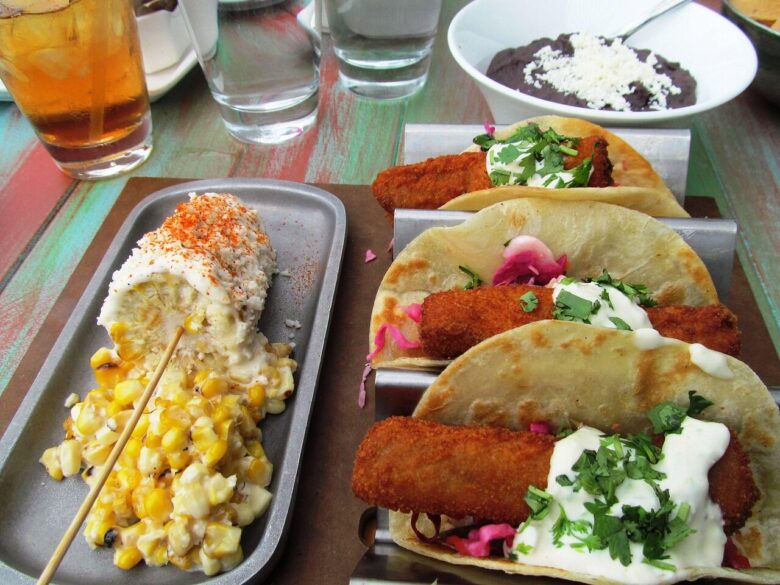
Mexican cooking commonly uses queso fresco, cotija, and Oaxaca cheese, often more selectively. Queso fresco may be crumbled cold on top, while Oaxaca melts inside a quesadilla. In many dishes, cheese is an accent rather than the main sauce.
The one-glance test: if the dish is covered in melted yellow cheese, it is likely Tex-Mex or Tex-Mex-influenced.
The Tortillas
Tex-Mex leans on flour tortillas, often large and thick, and on preformed hard taco shells. Mexican cooking commonly uses thin, pliable corn tortillas, warmed before serving, while flour tortillas are especially important in northern dishes.
In many Mexican dishes, the tortilla is both a utensil and a base. In Tex-Mex, it may be fried rigid or wrapped around a large burrito filling.
The Sour Cream
Thick sour cream is strongly associated with American and Tex-Mex service. Mexican dishes often use crema — thinner, tangier, and runnier. It is commonly drizzled rather than dolloped, adding acidity as well as richness. A thick white dollop on the plate is a familiar Tex-Mex signature.
The Meat and the Seasoning
Seasoned ground beef is a hallmark of many Tex-Mex tacos. Mexican tacos more often use slow-cooked, chopped, or shredded meats seasoned with chiles — including al pastor, carnitas, and barbacoa — rather than a packet blend.
That packet illustrates part of the seasoning divide: Tex-Mex often uses a uniform mix of cumin, chili powder, garlic powder, onion powder, paprika, and salt. Mexican cooking frequently builds flavor with individual spices and whole dried chiles — cumin toasted in oil, oregano crushed at the end, or dried chiles rehydrated and blended into sauces. The flavor is built in layers rather than coming from a single seasoning mix.
The History (Why Both Are Legitimate)
Tex-Mex developed in Texas, particularly among Tejano communities, from Mexican culinary traditions and ingredients available in the region. Over time, ingredients such as cheddar, wheat flour, and beef became prominent in many dishes. It evolved into something distinct and valid — a genuine regional American cuisine — but separate.
Authentic Mexican food, meanwhile, is not one thing. Oaxaca, Yucatán, Jalisco, and Puebla each have distinct cuisines, let alone their differences from Tex-Mex. There is no single “authentic Mexican” recipe. There are hundreds, shaped by climate, history, and local ingredients — some with roots older than European contact. In 2010, UNESCO added traditional Mexican cuisine to its list of Intangible Cultural Heritage; that recognition focused on regional foodways built around ingredients such as corn and chiles, not every dish marketed as Mexican.
How to Tell at a Restaurant
Common Tex-Mex signs: hard shells, yellow cheese, sour cream, ground beef, oversized burritos, sizzling fajita platters, and a large free basket of chips and salsa.
Signs of Mexican regional cooking: soft corn tortillas (often doubled), crumbly white cheese, salsas in small dishes, meats like al pastor, carnitas, or barbacoa, regional specialties like mole or tlayudas, and simple garnishes such as onion, cilantro, and lime.
Both can be delicious. But they are not the same thing, and recognizing the distinction gives each cuisine its due.
FAQ
Is Tex-Mex “fake” Mexican food? No — it is real food with a real history, created largely by Tejanos (Texans of Mexican descent). The issue is labeling, not legitimacy. Calling it Tex-Mex honors what it actually is.
Are burritos Mexican or American? They can be either. Small, simple burritos exist in northern Mexico, including Chihuahua and Sonora. The overstuffed rice-beans-meat-cheese-guacamole version is a US variation popularized in San Francisco’s Mission District.
Why do Mexican restaurants in the US serve free chips and salsa? It is a Tex-Mex hospitality convention that spread nationwide. In Mexico, totopos appear with certain dishes, but the bottomless pre-meal basket is primarily an American restaurant ritual.
Is one healthier than the other? Not necessarily. Mexican regional cooking often features corn tortillas, vegetables, legumes, and cheese used as an accent, while many Tex-Mex dishes emphasize melted cheese, sour cream, and fried shells. However, both cuisines include rich and light dishes, so the ingredients and portion size matter more than the label alone.
If a restaurant serves fajitas AND mole, what is it? A menu covering both traditions — extremely common in the US, and not a red flag. Judge each dish by its own signals: how the mole tastes matters more than what is on the next page of the menu.
— Mariana

MexFood Kitchen Editorial Team publishes practical guides to Mexican recipes, ingredients, meal preparation and cooking techniques. Our editorial goal is to provide clear instructions, useful context and realistic guidance for home cooks. Content is reviewed for clarity and updated when corrections or improvements are needed.