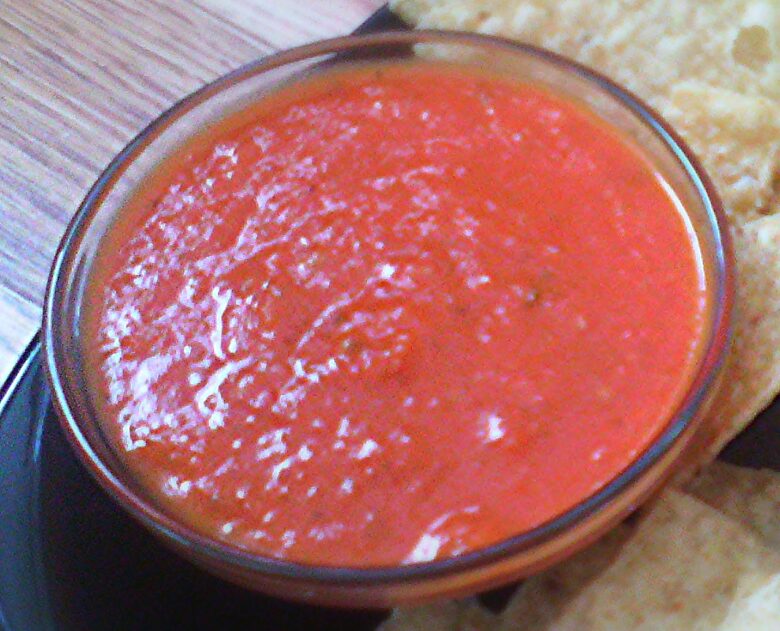
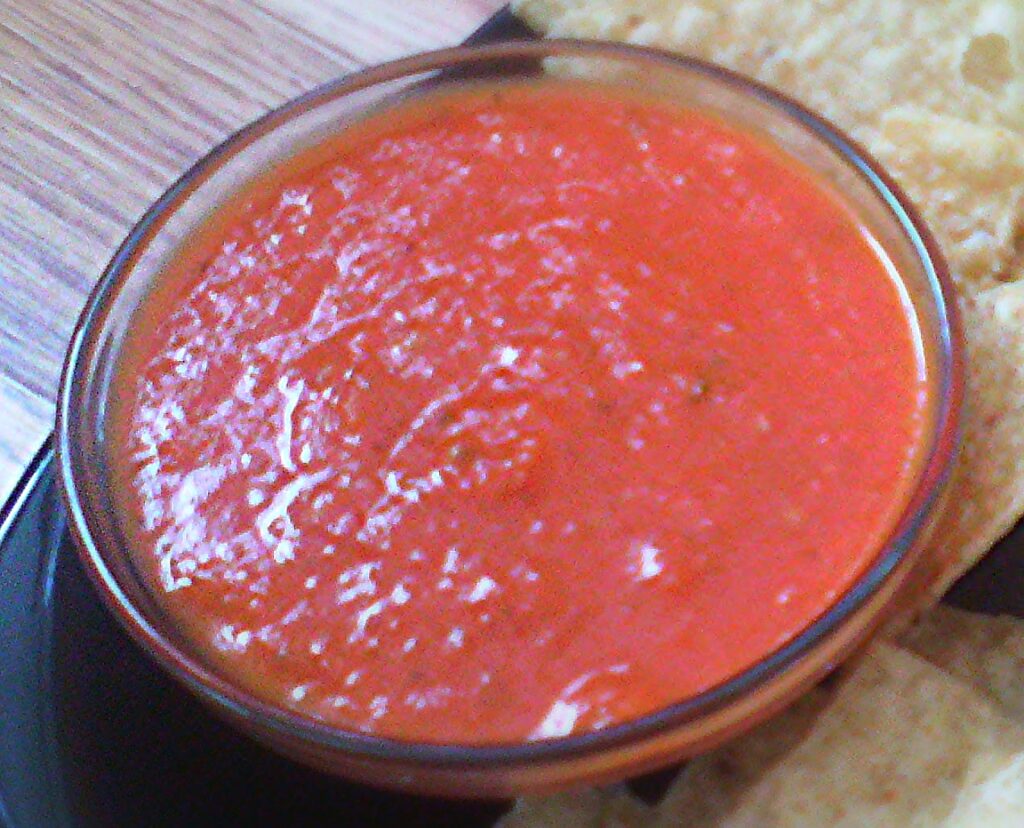
This salsa is more than diced tomatoes in a bowl. It is a balance of heat, acid, and texture that takes five ingredients and about twenty minutes to make. This is salsa roja — a red table salsa commonly served at Mexican restaurants. It is cooked, not raw, and that changes everything.
The Recipe
Prep: 5 min · Cook: 10 min · Rest: 10 min · Yield: ~2 cups · Keeps: 5 days refrigerated
Ingredients
- 4 medium Roma tomatoes, halved
- 2 dried guajillo chiles, stemmed and seeded
- 1 dried chile de árbol, stemmed (optional — this is the heat)
- 2 garlic cloves, unpeeled
- 1/4 white onion, roughly chopped
- ~1 tsp salt, to taste
Why Roma tomatoes: they’re meatier and less watery than round slicing tomatoes. Standard tomatoes make a thin salsa that needs extra cooking to reduce.
Steps
- Toast the chiles: heat a dry skillet or comal over medium-high. Toast the dried chiles about 15 seconds per side — they darken slightly and release a sharp, fruity aroma. Do not let them blacken; burnt chiles turn bitter and ruin the batch. Remove and set aside.
- Char the tomatoes and garlic: place the tomato halves cut-side down on the same skillet with the unpeeled garlic cloves. Char 4–5 minutes, turning the tomatoes once, until softened and blackened in spots. The garlic roasts inside its skin.
- Soak the chiles in hot water for 5 minutes until soft. Drain, reserving 1/4 cup of the soaking liquid.
- Blend: peel the garlic. Blend the tomatoes, garlic, chiles, onion, a pinch of salt, and 2 tablespoons of the soaking liquid until smooth. Too thick? Add water a tablespoon at a time. Too thin? Don’t worry — it thickens slightly as it cools.
- Rest 10 minutes, then season to taste. Salsa may need more salt than you expect — the tomatoes and chiles can taste bland without it. A full teaspoon often works for this batch. Taste after the rest, when the flavors have merged.
The Fix-It Table
| Problem | Fix |
|---|---|
| Too spicy | Blend in another charred Roma tomato |
| Too mild | Add another chile de árbol and re-blend |
| Tastes flat | More salt first; then a squeeze of lime |
| Too thick | Water, 1 tbsp at a time |
| Too thin | Wait — it thickens as it cools; or simmer 3–4 min |
| Bitter | Chiles were burnt — no fix; start over and toast lighter |
Serving and Storing
Serve at room temperature — cold salsa straight from the refrigerator can taste muted. If it’s been chilled, let it sit out twenty minutes before serving.
Store in a glass jar with a tight lid; it keeps five days refrigerated. For more practical guidance, see how to store avocados, salsa and tortillas. The flavor may improve after the first day as the chiles continue to infuse. Don’t freeze this one — the texture breaks and turns grainy.
Variations
Salsa verde: replace the tomatoes and dried chiles with 1 lb of tomatillos and 1–2 serranos. Char the tomatillos and garlic the same way, then blend with the onion, a handful of cilantro, and salt. No soaking step needed.
Smoky salsa: add one chipotle chile in adobo to the blender. It makes the salsa darker, thicker, and much hotter — start with half a chipotle if you’re unsure.
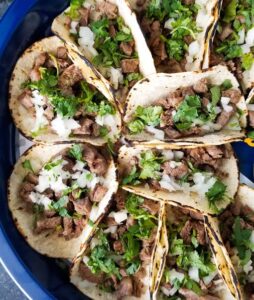
Taquera-style (thinner, for drizzling): add 2 extra tablespoons of the chile soaking liquid and blend longer. This is the consistency for spooning over street tacos rather than scooping with chips.
FAQ
Can I make this without dried chiles? You can char 1–2 fresh jalapeños alongside the tomatoes instead, but the flavor changes — guajillos bring a fruity depth that fresh chiles don’t have. Dried guajillos keep well in the pantry, so they’re worth stocking.
Why cook the salsa instead of blending everything raw? Charring concentrates the tomatoes’ sugars, mellows the garlic and onion, and adds a faint smoky edge associated with restaurant-style salsa. Raw blending gives you pico-adjacent freshness; roasting gives you depth. Different tools for different jobs.
My blender made it foamy and pink. What happened? Over-blending whips in air. Pulse in short bursts until just smooth instead of running the blender continuously. The foam settles in about 15 minutes either way, and the color deepens as it rests.
Is this the same salsa restaurants serve with chips? It’s in the same family. Many taquerias make a version with charred tomato, dried chile, garlic, onion, and salt. Restaurant batches are often thinner (more soaking liquid) and sometimes simmered after blending for a softer, cooked edge. Both are within this recipe’s reach.
Can I double or triple it? Yes, freely — char the tomatoes in batches so they sit flat on the skillet, and blend in two rounds if your blender is small. Seasoning does not scale perfectly linearly: taste as you salt rather than doubling the teaspoon blindly.
— Mariana

MexFood Kitchen Editorial Team publishes practical guides to Mexican recipes, ingredients, meal preparation and cooking techniques. Our editorial goal is to provide clear instructions, useful context and realistic guidance for home cooks. Content is reviewed for clarity and updated when corrections or improvements are needed.