Mexican rice is not just rice with tomato sauce. It is a technique. The rice must be toasted first, the liquid measured exactly, and the lid left alone. Small errors in the liquid ratio, heat, or resting time can leave the rice mushy.
The three defenses against mushy rice: toast the grains in oil, use 1¾ cups of liquid per cup of rice (not 2), and rest 10 minutes with the lid on.
The Recipe
Prep: 10 min · Cook: 20 min · Rest: 10 min · Serves: 4–6
Ingredients
- 1 cup long-grain white rice — not jasmine, not basmati, not short-grain
- 2 tbsp neutral oil
- 1 medium tomato
- 1/4 white onion
- 1 garlic clove
- 1/2 tsp salt
- Chicken or vegetable broth (to complete 1¾ cups of total liquid with the tomato blend)
- Optional: 1 bay leaf, small pinch of cumin, 1/2 cup thawed peas and carrots (added at the end)
If you want to vary the optional cumin, this guide to Mexican spices and how to use them explains the flavors of common seasonings.
Steps
- Rinse the rice under cold water until it runs mostly clear — this removes the surface starch that makes rice clump. Five minutes of rinsing saves you from a pot of paste. Drain completely; wet rice steams instead of toasting. Spread on a towel for five minutes if unsure.
- Blend the base: purée the tomato, onion, garlic, and salt with just enough water to blend smooth. Strain if you want a smoother finish. Combine with broth to total exactly 1¾ cups of liquid.
- Toast — non-negotiable: heat the oil in a heavy pot over medium-high. Add the rice and stir constantly 4–6 minutes. The grains go translucent → opaque white → light golden, and some will puff. You want a faint nutty smell, never burnt. This builds flavor raw rice never achieves and coats each grain in oil, slowing liquid absorption — the first defense against mush.
- Add the liquid (it will sizzle violently), stir once to distribute, and add the bay leaf and cumin if using. Do not add the peas and carrots yet — they release moisture and throw off the ratio.
- Boil, then lockdown: bring to a full boil uncovered, then immediately drop to the lowest heat, cover tightly, and do not lift the lid for 15 minutes. Not once. Every peek releases steam and extends the cooking, which overcooks the rice.
- Rest 10 minutes off the heat, lid on. The second defense: residual steam redistributes the moisture, the grains firm up, and the bottom layer releases from the pot.
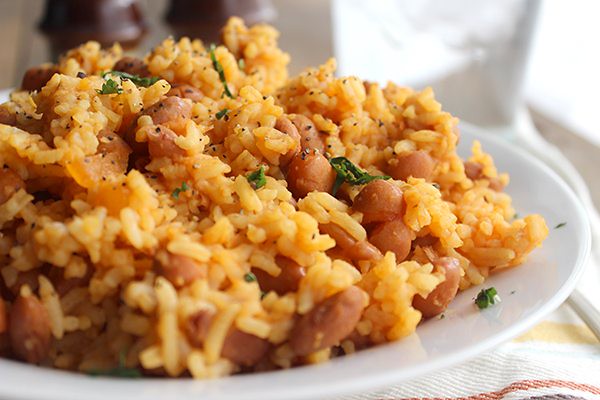
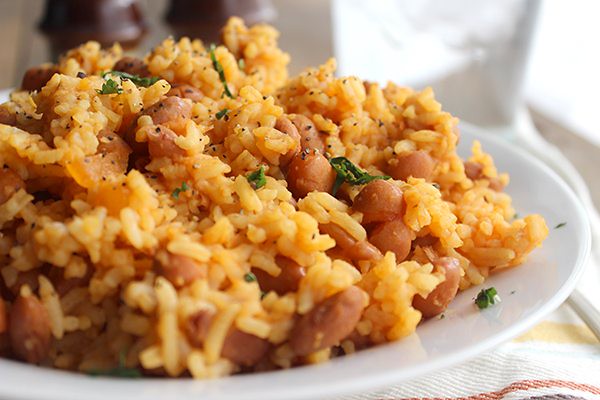
- Fold in the peas and carrots now, if using, and fluff gently with a fork. The grains should be separate, tender, and stained pale orange-red.
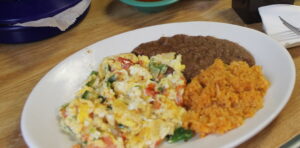
Serve the rice with beans, tacos, grilled meat, or vegetables, adding easy homemade salsa at the table if you want more acidity and heat.
Troubleshooting Table
| Result | Cause | Fix next time |
|---|---|---|
| Mushy | 2 cups of liquid instead of 1¾; skipped toasting; peeked under the lid | Measure exactly; toast 4–6 min; hands off the lid |
| Crunchy / undercooked | Heat too high (liquid gone too fast); skipped the rest | Lowest simmer; always rest 10 min covered |
| Bland and pale | All water, no broth or tomato; under-toasted | Half tomato blend + half broth; toast to golden |
| Burned bottom | Heat too high after the boil; thin pot | Lowest setting; use a heavy pot or Dutch oven |
| Clumped grains | Rice not rinsed, or stirred during simmering | Rinse until clear; stir once only, at the start |
| Wet, heavy rice with vegetables | Peas/carrots added at the start | Add them thawed, after the rest |
Scaling Up
The ratio scales directly: 2 cups rice → 3½ cups liquid. Use a wider pot, not a taller one — rice cooks evenly in a thin layer, while a tall narrow pot overcooks the bottom before the top softens. Past 3 cups of rice, split into two pots.
Storing and Reheating
Keeps 3 days refrigerated. Reheat in the microwave with a damp paper towel over the container — the steam brings it back. Freezes for a month in flat bags; thaw overnight in the refrigerator. (Cool it within an hour of cooking before storing.)
FAQ
Why 1¾ cups and not the 2 cups on the rice package? Package ratios are general and vary by brand and cooking method. For this stovetop method, the tomato blend and broth should total 1¾ cups so the grains cook through without excess liquid.
Can I make this in a rice cooker? You lose the toasting, which is most of the flavor. Compromise: toast the rice and fry the tomato blend in a skillet first, then transfer everything to the cooker with the same 1¾ ratio on the “white rice” setting.
Is Mexican rice the same as Spanish rice? In US usage, the names are often used interchangeably. This recipe refers to the tomato-based, orange-red rice commonly called Mexican rice.
My tomato blend is more than the liquid allows. Do I use it all? No — the total liquid (blend + broth) must equal 1¾ cups per cup of rice. Measure the blend first, then top up with broth to the line. Leftover blend keeps 3 days and starts tomorrow’s sopa de fideo.
Can I use brown rice? The technique holds but the numbers change: about 2¼ cups liquid per cup of brown rice and 40–45 minutes covered. The result is nuttier and chewier — good, but not the same texture as white rice.
— Mariana

MexFood Kitchen Editorial Team publishes practical guides to Mexican recipes, ingredients, meal preparation and cooking techniques. Our editorial goal is to provide clear instructions, useful context and realistic guidance for home cooks. Content is reviewed for clarity and updated when corrections or improvements are needed.