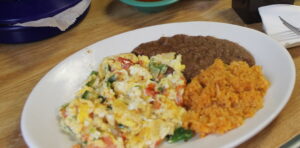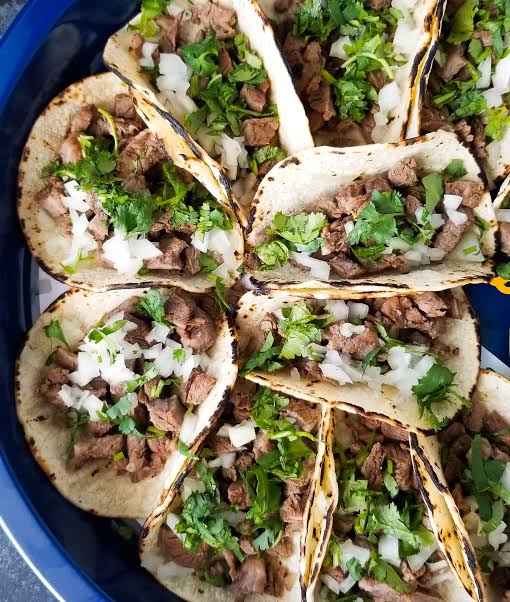
The tacos most people know are built backwards: hard shell, ground beef, shredded cheese, and lettuce. That is Tex-Mex, and it is fine if you like it. But it differs from the many regional taco styles found in Mexico. Learn more about the difference between Tex-Mex and Mexican food.
Many street tacos are simple by design. The tortilla is the foundation. The filling is seasoned with care. The garnishes are minimal because they should be. Below is a complete recipe for carne asada street tacos with two salsas, followed by the technique behind every element, so you can apply it to any filling.
The Complete Recipe: Carne Asada Street Tacos
Prep: 15 min · Marinate: 30 min to 4 hrs · Cook: 15 min · Makes: 12 tacos (serves 4)
Ingredients
For the meat:
- 1.5 lb (700 g) skirt, flank, or flap steak
- 3 tbsp lime juice (about 2 limes)
- 2 tbsp olive oil
- 3 garlic cloves, minced
- 1 tsp dried Mexican oregano
- 1 tsp ground cumin
- 1/2 tsp salt
- 1/4 tsp black pepper
For serving:
- 24 corn tortillas (2 per taco)
- 1/2 white onion, diced small
- 1/2 cup cilantro leaves, roughly torn
- 2 limes, in wedges
- Salsa verde and/or salsa roja (recipes below)
- Optional: thinly sliced radish
Steps
- Marinate: whisk the lime juice, oil, garlic, oregano, cumin, salt, and pepper. Pour over the steak in a shallow dish, turn to coat, and refrigerate for at least 30 minutes — up to 4 hours, never overnight. The lime acid starts breaking down the texture and turns the meat mushy past that point.
- Pat dry: remove the steak from the marinade and pat it dry with paper towels. Wet meat steams instead of searing.
- Sear hot and fast: heat a cast-iron skillet or grill until it’s screaming hot. Cook the steak 3–4 minutes per side for medium (skirt and flank are thin — they go fast). You want char, not gray steam.
- Rest, then chop: rest the meat 5 minutes so the juices settle, then chop roughly against the grain into small, irregular pieces. Small pieces grip the tortilla better than slices.
- Warm the tortillas: 30 seconds per side on a dry skillet, kept in a towel-lined basket. Stack two per taco.
- Assemble in order: meat first, against the warm tortilla. Salsa spooned over, so it seeps in. Onion and cilantro next, staying crisp against the hot filling. Lime squeezed at the very last second. Eat immediately — tacos do not wait.
Salsa Verde Cruda (5 minutes, no cooking)
Yield: ~1.5 cups · Keeps: 5 days refrigerated
- 4 tomatillos, husked and rinsed
- 1 serrano chile (stemmed; seeded for mild)
- 1/4 white onion
- 1 handful cilantro
- 1/4 tsp salt
Blend everything until nearly smooth. Sharp, fresh, and well suited to grilled meat, chicken, or fish.
Salsa Roja de Guajillo (15 minutes)
Yield: ~1.5 cups · Keeps: 7 days refrigerated
- 3 dried guajillo chiles (or 2 guajillo + 1 ancho for deeper flavor), stemmed and seeded
- 2 Roma tomatoes
- 1/4 white onion
- 1 garlic clove
- 1/2 tsp salt
- Toast the chiles in a dry skillet 20–30 seconds per side until fragrant — pull them before they darken, or the salsa turns bitter. Soak in hot water for 10 minutes.
- In the same skillet, char the tomatoes and onion until blackened in spots, about 6 minutes.
- Blend the drained chiles, tomatoes, onion, garlic, and salt with 1/3 cup of the soaking water.
Both salsas should be thin enough to drizzle, not thick like a dip. Salsa needs to soak into the meat and tortilla, binding the taco together. Thick salsa just sits on top.
The Technique Behind Every Element
The Tortilla
Corn tortillas are a good fit for this recipe. Fresh if you can find them, but store-bought works if you wake them up: wrap a stack in a slightly damp kitchen towel and warm on a dry skillet, or microwave 45 seconds wrapped in a damp paper towel. The goal is flexibility — a stiff tortilla cracks and dumps the filling. For weekends, homemade tortillas are worth the effort; for weeknights, good store-bought corn tortillas are completely acceptable. These additional methods explain how to reheat tortillas without drying them out.
The Meat: Which Cut for Which Taco
| Protein | Best cheap cuts | Why |
|---|---|---|
| Beef | Skirt, flank, flap | Thin, flavorful, sear in minutes |
| Pork | Shoulder, country-style ribs | Fat keeps them juicy; great charred or braised |
| Chicken | Thighs | Stay moist; more flavor |
| Fish | Any firm white fish | Cooks in 4–5 min; pair with salsa verde cruda |
For thin, quick-cooking cuts, the technique is the same: season simply (salt, garlic, chile or the lime marinade above), cook hot and fast for char, and rest before chopping against the grain. Tougher cuts such as pork shoulder are better braised until tender.
The Garnishes: Restraint
A common street-taco garnish combination is diced white onion, torn cilantro, lime at the last second, and optionally a slice of radish for crunch. For this style, skip cheese, sour cream, and lettuce, which can cool the taco down and mute the flavors you just built. If you want cheese, crumble a little queso fresco. But try it without first.
Two details that matter: dice the onion small, about the size of a grain of rice — big chunks fall out and overpower the bite. And tear the cilantro instead of chopping; chopping bruises the leaves and wilts them.
Why Simple Tacos Work
Some restaurant tacos are overbuilt. Too many ingredients, too many sauces, too much cheese — a heavy, confusing bite where nothing stands out. A well-balanced taco combines a warm, slightly sweet tortilla; savory, charred meat; hot, acidic salsa; and fresh, crunchy onion and cilantro. Each bite shifts as you eat because the elements are layered, not mixed into a uniform paste.
The key is not a secret ingredient, but the structure.
Common Mistakes at Home
- Cold tortillas. They crack and taste stale. Always warm them.
- Overcooked meat. High heat, short time. Gray, steaming meat means the pan wasn’t hot enough.
- Thick salsa. It should pour. Thick salsa sits on top instead of soaking in.
- Too many garnishes. Three things maximum after the meat and salsa.
- Assembling too early. Build and eat. A platter of pre-assembled tacos is a platter of soggy tacos.
Weeknight Shortcut (20 minutes)
No time for marinade and homemade salsa? Season thinly sliced steak with salt, cumin, and garlic powder. Sear 2 minutes per side in a very hot skillet. Rest, chop, serve with a good store-bought salsa and a quick dice of onion and cilantro. The technique still carries it. The difference between a good taco and a great one is attention, not time.
FAQ
Why two tortillas per taco? The double layer is common for small street tacos and holds up to the meat juices and salsa without tearing — and if one tortilla breaks, the second saves the taco. With very fresh, thick tortillas, one is enough.
Can I use flour tortillas? In northern Mexico, flour tortillas are traditional for some tacos (especially carne asada in Sonora). Everywhere else, corn is the default. If you use flour, skip the double layer.
How spicy are these salsas? With one serrano, the verde is medium. Seed the chile for mild, add a second for hot. The guajillo roja is mild-to-medium by nature — guajillos bring flavor more than heat.
What if I can’t find skirt or flank steak? Sirloin flap (“bavette”) is often cheaper and works identically. In a pinch, thin-cut sirloin does the job — just don’t use stew cuts like chuck for this fast-sear method.
Can I make anything ahead for a taco night? Both salsas (within the storage times listed above), the diced onion (1 day), and the marinade can be prepared ahead. Mix the marinade in the morning and add the meat after work. Cook the meat and warm the tortillas only when people are ready to eat.

MexFood Kitchen Editorial Team publishes practical guides to Mexican recipes, ingredients, meal preparation and cooking techniques. Our editorial goal is to provide clear instructions, useful context and realistic guidance for home cooks. Content is reviewed for clarity and updated when corrections or improvements are needed.