Flour tortillas are forgiving. They do not require masa harina, a press, or years of practice. What they require is understanding how the dough behaves. Once you feel that, you can make them without measuring. Until then, follow the steps exactly — and use the troubleshooting table at the end when something looks wrong.
The key in one line: hot water, a little fat, gentle kneading, and a 20-minute rest.
The Recipe
Prep: 15 min · Rest: 20 min · Cook: 15 min · Makes: 8 tortillas (7-inch)
Ingredients
- 2 cups (250 g) all-purpose flour
- 1/4 cup (50 g) lard or vegetable shortening
- 1 tsp salt
- 3/4 cup (180 ml) water, just off the boil
Why these four ingredients work:
- Flour: all-purpose only, to start. Bread flour makes tougher tortillas; whole wheat changes the texture entirely.
- Fat: lard gives a rich flavor; shortening works and is easier to find; butter is acceptable but browns faster. Oil changes the texture and can make the dough feel greasy, so solid fat is recommended for this recipe.
- Water: hot, just off the boil. Hot water partially cooks the starch, which is what creates softness. Cold water makes tough tortillas. This is the single most important ingredient decision.
Steps
- Rub the fat into the flour with your fingertips until the mixture looks like coarse sand, 3–4 minutes. Do not rush this — the fat must coat the flour particles to create tenderness.
- Dissolve the salt in the hot water, then pour it into the flour. Stir with a fork until a shaggy dough forms.
- Knead for two minutes. Not ten. Not five. Two. The dough should be soft and slightly sticky. If it feels firm, the water wasn’t hot enough or there’s too much flour.
- Rest 20 minutes, covered. This relaxes the gluten so the dough rolls out instead of springing back. There is no substitute for this step.
- Divide into 8 balls. Flatten each slightly, then roll into a thin 7-inch circle — slightly thinner than a coin. They puff when cooked, so start thin.
- Heat a dry skillet or comal over medium-high for a full 3 minutes before the first tortilla goes in.
- Cook 45–60 seconds per side. It will bubble and puff — that’s steam escaping, and it’s the sign of a good tortilla. Press gently with a spatula if needed for even contact.
- Stack in a clean towel as you go. The trapped steam keeps them soft. Left exposed, they crisp and dry within minutes.
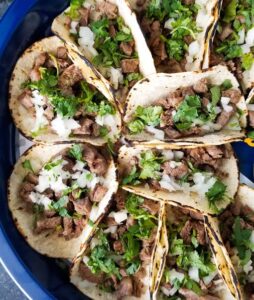
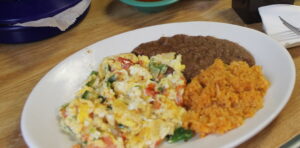
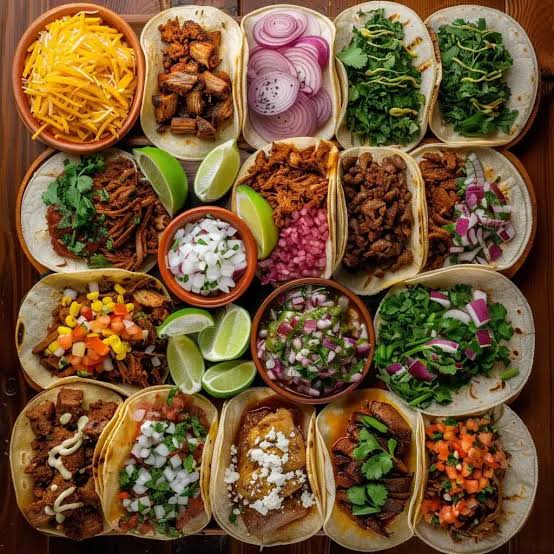
Serve the tortillas with tacos, quesadillas, or eggs and other Mexican breakfast recipes.
Troubleshooting: What Went Wrong
| Problem | Cause | Fix |
|---|---|---|
| Dough springs back when rolling | Rest was skipped or too short | Cover and rest 10 more minutes |
| Tortillas are tough/chewy | Over-kneaded, or cold water | Knead only 2 min; water just off the boil |
| Dry, cracker-like tortillas | Skillet too cool (slow cooking dries them) | Preheat 3 full minutes; 45–60 sec per side |
| Bitter dark spots | Too much dusting flour burning on the skillet | Dust the counter lightly, brush excess off |
| Doesn’t puff | Rolled too thick, or uneven thickness | Roll thinner than a coin, even to the edges |
| Greasy, slack dough | Oil used instead of solid fat | Use lard, shortening, or butter |
| Stiff by the time you eat | Stored exposed to air | Stack in a towel immediately off the skillet |
Storing and Reheating
- Room temperature: 2 days, wrapped tightly.
- Freezer: up to 3 months, stacked between layers of parchment paper. Reheat directly on a hot skillet from frozen — 30 seconds per side.
- Never microwave to reheat these; it makes them rubbery. The skillet takes the same 30 seconds and keeps them soft. For additional methods, see how to reheat tortillas without drying them out.
Homemade tortillas have a fresh flavor and soft texture, especially when served warm from the skillet.
FAQ
Can I double the recipe? Yes, it doubles cleanly (4 cups flour, 1/2 cup fat, 2 tsp salt, 1.5 cups hot water — makes 16). Keep the balls covered while you roll and cook one at a time; exposed dough dries and cracks.
Can I make the dough ahead? The dough keeps overnight in the fridge, wrapped. Bring it back to room temperature for 30 minutes before rolling — cold dough resists the pin. Cooked tortillas ahead of time beat refrigerated raw dough, though.
Why won’t my tortillas come out round? Practice, honestly. The mechanical fix: roll from the center outward, give the dough a quarter turn after each pass, and don’t flip it. Perfectly round matters less than evenly thin — an oval tortilla that’s uniform cooks better than a round one with thick edges.
Do I need a tortilla press? Not for flour tortillas — presses are for corn masa. Flour dough has gluten and needs a rolling pin to stretch thin. If you only have a press, you’ll get thick, small tortillas.
Can I make these gluten-free? Not with this recipe — the structure depends on wheat gluten. Gluten-free flour blends produce something closer to a crumbly flatbread. For gluten-free, corn tortillas (masa harina + water) are the natural answer and are naturally gluten-free.
— Mariana

MexFood Kitchen Editorial Team publishes practical guides to Mexican recipes, ingredients, meal preparation and cooking techniques. Our editorial goal is to provide clear instructions, useful context and realistic guidance for home cooks. Content is reviewed for clarity and updated when corrections or improvements are needed.